
How To Blend A Bottle Of High Quality Perfume?
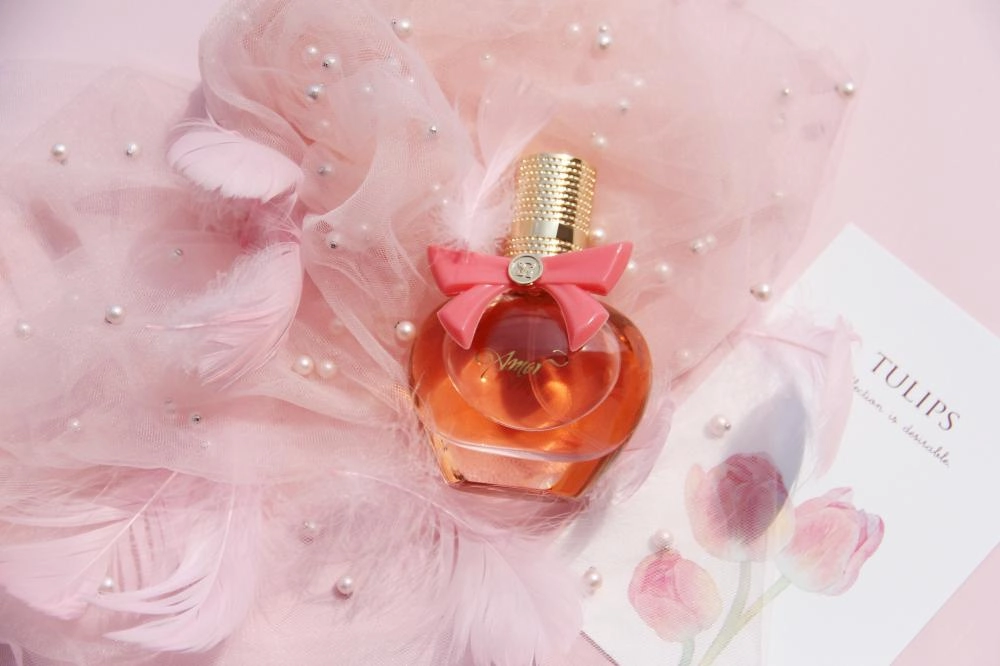
How To Blend A Bottle Of High Quality Perfume?
STEP 1: Pre-processing
The raw materials for making perfume, such as alcohol, essence and water, must be pure and free of impurities. Therefore, they need to undergo pre-treatment before use to ensure that the product has a clear appearance, a mellow smell and a round aroma.
① Pretreatment of alcohol: including purification and aging.
There are two commonly used methods for purification, namely the reflux method with alkali added to alcohol and the oxidation method with potassium permanganate. The purpose is to remove impurities. Sodium hydroxide is added to alcohol, boiled and refluxed for several hours. Then, it undergoes one or more fractionations to collect the purest part of its aroma for making perfume. Alternatively, potassium permanganate solution can be added to alcohol, stirred rapidly, let stand, filter out the precipitate, and then add activated carbon. After being placed for several days, it is filtered through silica gel to further absorb impurities. The aging process involves adding a small amount of flavoring to the purified alcohol and sealing it at 15℃ for several months.
② Pretreatment of the essence: Add a small amount of pre-treated alcohol to the essence and let it age for one month before use.
③ Pretreatment of water: Distillation or sterilization and deionization. Sodium citrate or EDTA is usually used to remove metal ions.
STEP 2: Intermixing
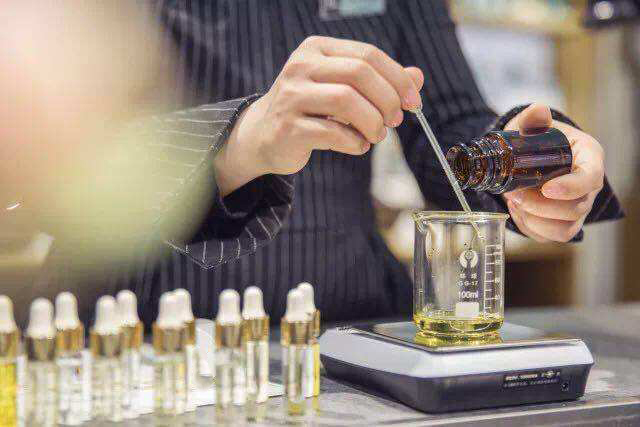
Put alcohol, essence and water in a stainless steel or enamel, silver-lined or tin-lined container in a certain proportion, stir and mix, and let it stand for a period of time to allow the impurities in the essence to fully settle. This improves the clarity of the finished product and its anti-turbidity under cold conditions.
STEP 3: Ageing
The mixed perfume is placed in a sealed container equipped with a safety valve for aging. There are two methods for the aging of perfume: physical methods and chemical methods. Physical methods include mechanical stirring, air bubbling, infrared and ultraviolet light irradiation, ultrasonic treatment, and mechanical vibration.
Chemical methods include air, oxygen or ozone bubble oxidation, silver or silver chloride catalysis, and tin or hydrogen reduction. During the aging period, the scent of the perfume gradually changes from rough to mellow and rich. However, if the essence is not properly mixed, it can also produce an unsatisfactory smell. Regarding the duration of aging, some people think it should take three months, while others believe it should be longer or shorter. It can be adjusted according to factors such as production conditions.
STEP 4: Freeze
When perfume is exposed to a lower temperature, it turns semi-transparent or foggy. After that, even if it is heated further, it will no longer be clear and will remain cloudy. Therefore, perfume must be frozen before filtration.
STEP 5: Filtration
After aging and freezing, some insoluble substances precipitate out. Filtration is used to remove them to ensure transparency and clarity. Filtration is carried out by using a filter press, and filter AIDS such as diatomite are added to adsorb and precipitate the particles; otherwise, the precipitate will clog the pores of the filter cloth. After adding the filter aid, the perfume should be cooled to around 0℃ and maintained at this temperature during filtration. The temperature of the filter press can be cooled by circulating the already cooled perfume multiple times.
After the precipitates produced during aging and cooling are filtered out, the product can be returned to room temperature and filtered through a fine-pore cloth once again. This ensures that the product remains clear and transparent during storage and use. During filtration, due to the use of filter AIDS, some fragrances may be adsorbed, resulting in a loss of aroma. This should be estimated in advance and compensated for afterwards.
STEP 6: Color Addition
Color addition is usually carried out after the filtration process; otherwise, the color is prone to being adsorbed by the filter aid. However, color must be added after color comparison with the standard sample.
STEP 7: Product Inspection
Use instruments to compare color, measure specific gravity and refractive index, and determine alcohol content by conventional methods, etc.
STEP 8: Bottling
The bottles should be washed with distilled water. When bottling, some space should be left at the neck of the bottle to prevent the solution inside from expanding due to heat during storage and causing the bottle to break.
Recommended Articles
You May Also Like
Get in Touch with us
If you have any comments or good suggestions, please leave us a message; later our professional staff will contact you as soon as possible.
Integrating innovative technology and creative design, we craft a unique fragrance experience for your brand.
Facebook
Twitter
YouTube
VK
Instagram